Green waste
Let’s keep green waste out of landfill
Keeping green waste out of landfill and reducing contamination in green waste bins is an important step in how we manage our green waste as we head towards a zero waste future.
With more than 30% of what we send to landfill could be composted, it’s clear that improving our waste separation is a crucial step towards reducing landfill waste and managing costs.
Meet our green waste truck driver, Justin, and learn about his day and why keeping green waste out of landfill is important.
Order a green waste bin
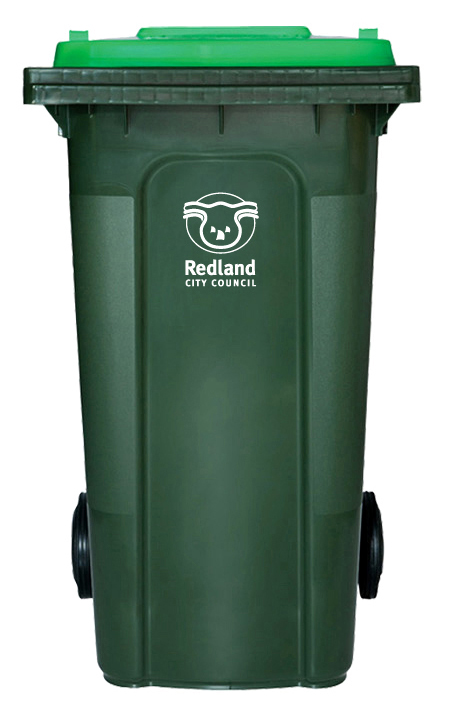
Council audits show that almost a third of kerbside wheelie bin waste sent to landfill is green waste. Our green waste collection service, for mainland residents only, offers fortnightly kerbside collection of your garden waste. Green waste is collected in the same way as your general household waste and recycling and helps divert garden waste from landfill.
A green bin will weed out waste ending up in landfill and turn your green waste into new, enriched garden organics like soil enhancers and mulches.
It's in our nature... to rethink our waste.
Call 3829 8999 or order online.
Green waste bins are available to mainland residents only. An annual ongoing fee of $75 applies and is subject to change for the first bin (for the 2026/2027 financial year) and additional bins are available. Newly built properties ordering a green waste bin with a waste and recycling service will incur a $30 bin establishment fee.
What can go in a green waste bin
- Garden prunings
- Grass clippings (do not bag)
- Shrubs
- Weeds and flowers
- Leaves and loose bark
- Sawdust
- Small branches or soft wood (no larger than 75cm in length or 10cm in diameter)
What can't go in a green waste bin
- Bagged green waste (including biodegradable / compostable bin liners)
- Anything other than organic garden waste
- Batteries and all e-waste
- Building material including asbestos, chip board, bricks and concrete
- General waste including all plastics, bagged rubbish and recyclables
- Plant pots, hoses, rakes
- Timber, large logs, branches, soil and stumps
- Food scraps
- Kitty litter / animal droppings
- Nappies
- Commercially compostable packaging and containers including coffee cups
- Thatch
- Soil
See Important tips for collection day for further information on managing your bins.
Get a better bin bundle
Swap to a better bin bundle for no extra cost!
Offset the cost* of your new household green waste bin by down-sizing to a 140L red-lid general waste bin when you order. That's an extra bin at no extra cost on your rates making it better for your budget. Plus, if you upsize your recycling bin from a 240L to a 340L recycling bin, order a green waste bin and downsize your general waste bin all at the same time, there is no establishment fee.
* There is a cost-saving of $49.80 per year (2026/2027 financial year) associated with downsizing your general waste bin at the same time as ordering a green waste bin. Note: if down-sizing to a 140L general waste bin separate to ordering a green waste bin, a bin establishment fee is applicable. An annual fee of $75 applies and is subject to change. For mainland residents only and for existing customers.
👉 Order online or Contact Council today
FAQs
Can I order more than one green waste bin?
Yes, you can order as many bins as you like. You will, however, be charged the additional fees which will be added to your rates notice.
How much extra will it cost me per year to have a green waste bin?
It is an extra $75 per year for the first bin (2026/2027 financial year) and additional bins are available. Price is subject to change.
Is there any way of reducing this cost?
If you’re no longer putting green waste in your general red lid waste bin, you could consider downsizing your waste bin to a 140L bin when you order a green waste bin. There is a cost-saving of $49.80 per year (2026/2027 financial year) associated with downsizing your general waste bin at the same time as ordering a green waste bin. Note: if down-sizing to a 140L general waste bin separate to ordering a green waste bin, a bin establishment fee is applicable.
I live on the Islands (North Stradbroke, Coochiemudlo and SMBI), can I order a green waste bin?
Unfortunately, there are no green waste bin services on the islands. Council is taking details from interested property owners for an optional user-pays island green waste collection service.
Household green waste can be taken to your local recycling and waste centre free of charge (disposal criteria applies).
How long will it take for my bin to arrive?
It will take approximately two to three business days for your new green waste bin to arrive.
What can go in my green waste bin?
Acceptable bin items:
- Garden prunings
- Grass clippings (do not bag if using a green waste bin)
- Shrubs
- Weeds and flowers
- Leaves and loose bark
- Sawdust
- Small branches or soft wood (no larger than 75cm in length or 10cm in diameter)
What can’t go in my green waste bin?
Everything else not listed above. This includes the following unacceptable items:
- Anything other than organic garden waste
- Batteries and all e-waste
- Building material including asbestos, chip board, bricks and concrete
- General waste including all plastics, bagged rubbish and recyclables
- Plant pots, hoses, rakes
- Timber, large logs, branches, soil and stumps
- Food scraps
- Kitty litter / animal droppings
- Nappies
- Commercially compostable packaging and containers including coffee cups
When will the no bin establishment fee offer end?
At this stage, the no bin establishment fee is in place for the 2026/2027 financial year. This will be reviewed each financial year to assess whether it should be continued.
Does Council ever offer compost/mulch that goes into the green waste bins?
Green waste received at the recycling and waste centres or collected from kerbside green waste bins may contain weeds or other pest species. The green waste goes through an extensive composting process that destroys weeds in compliance with Australian Standard for Compositing (AS4454-2012). To ensure we do our bit to keep weeds under control, Council does not offer mulch back to residents.
Can I order a larger green waste bin?
Council has investigated the options of a larger green waste bin. The larger bins are unable to safely hold heavy organics such as wet grass and would have an impact on wheeling and lifting the bins and increase the likelihood of the bins splitting. The additional collection cost of a larger green waste bin is also prohibitive compared to getting two or more green waste bins.
What happens if I'm a tenant? How do I get one?
We are looking into the best way for tenants to be able to order a green waste bin. If you are a tenant and would like to submit your expression of interest for a green waste bin, please contact Council. In the meantime, we recommend you contact your landlord and request that they order a bin on your behalf.
Can I put green waste/garden waste in my general waste (red lid) bin?
Whilst it is part of the plan to reduce waste to landfill, we are encouraging residents to get a green waste bin. However, it is not mandatory to do so and you may put green waste/garden waste into your general waste (red lid) bin.
I received a tag on my green bin. What is this about?
Tags on bins are used to directly communicate with residents. It may advise that your bin is too full, the bin is broken or contamination in your green waste bin is identified. Please take note of the message and call Council if you have any questions.
Green waste bin costs and billing
Residents pay fees and charges for the Council’s waste services – this covers the cost of collection, disposal and processing. The annual charge for waste and recycling collection service is included on a property owner’s rate notice.
240L green waste bins can be ordered but are only available to mainland households.
The costs involved are:
- Annual fee for mainland property: $75.00 (2026/2027 financial year)
- Now $0 bin establishment fee* (saving $30)
Call 3829 8999 or complete the green waste bin request form to order yours now.
* $0 establishment fee applies when ordering a green waste bin. If you get a green waste bin, downsize your general waste from a 240L to a 140L waste bin a $0 establishment fee applies. Plus, you can upsize your recycling bin in the same order and no establishment fee applies.
All charges are available in waste and recycling utility charges(PDF, 222KB).
Why get a green waste bin?
- Affordable – just $1.45 a week on your rates (2026/2027 financial year)
- Convenient – no need to pack the trailer to visit the Recycling and Waste Centre
- Safe – kerbside collection makes it easier to reduce the risk of fire and storm damage posed by overgrown gardens
- Environment – your garden organics will be processed into soil and landscaping products
About the green waste collection service
- Green waste bins are only available for mainland residents at this time.
- Green waste bins are collected every two weeks, on the alternate week to recycle bins.
- Put your green waste bin kerbside with your general rubbish bin before 6.00am on your collection day.
- Green waste bin lids are lime green. If your general rubbish bin has the old green lid, it will be replaced with the newer red lid at no extra charge when your new green waste bin is delivered.
What happens to my green waste?
Watch Learn what happens to green waste when using a green waste bin.
Every week, three trucks collect green waste from more than 25,000 mainland households across Redlands Coast. We collect approximately 8,000 tonnes of green waste every year from the kerbside collection service. Once collected, the green waste truck drops off the garden waste at the mainland Recycling and Waste Centres. It's then taken to an organics composting facility, where it is put through a shredder and turned into a fine mulch and sold to landscape suppliers. In some cases, it goes through a more refined process (three months) of pasteurisation where it is kept at 55 degrees, which naturally breaks down and kills weeds, seeds and other nasties. The mulch, compost and other nutrient-rich products are then available to buy at landscaping suppliers, for use in homes, developments and parks and gardens across the community.
Items such as plastic bags, plant pots and hoses should never be placed in your green waste bin as these will contaminate the final product.
When is my bin day?
Redland City Council now has an online tool to help remind you of your collection day. Simply click on the link below, enter your suburb, street and house number and presto – you now have details of your waste and recycle collections for your property.
Find out when bins are collected on your street.
Tips and advice
Line the bottom of your empty green waste bin with a piece of cardboard or some newspaper. This helps to soak up any moisture and allows your green waste to easily fall out of the bin when it is collected.
Do not bag your green waste as plastic contaminates the compost product.
Ensure your bin lid can close:
- Do not allow palm fronds or garden pruning's to protrude from your bin.
- Items should not exceed 75cm in length or 10cm in diameter – our vehicles are unable to process large items.
Cleaning and care of bins
Council owns the bins; however, the cleaning and care of bins is the responsibility of the households using them.
You should not paint or deface bins in any way.
Moving house
We allocate bins to each property, not to the resident. When moving house, please leave bins at the property.